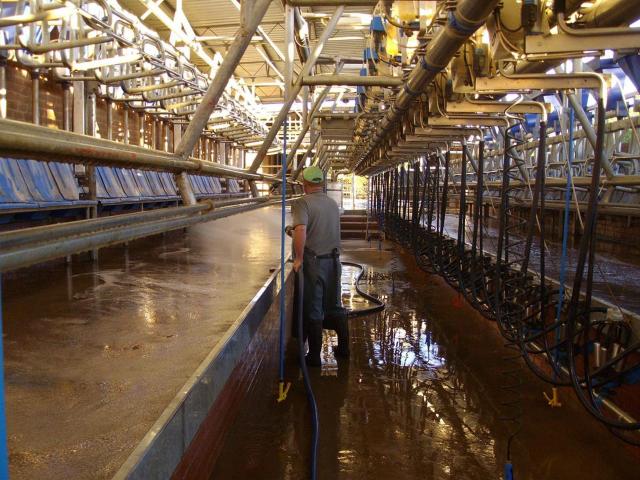
Whether it is for cleaning the milking machines, hosing out the yards, for milk cooling or running sprinklers, water plays a key role in the dairy shed.
Agriculture Victoria has some great resources available online to assist dairy farmers in calculating their water use in the dairy, including a guide called ‘Dairy Shed Water – how much do you use?’
This comprehensive guide assists dairy farmers to determine the current volume of water used in their dairy shed operations to:
* Provide a greater understanding and appreciation of the amount of water used.
* Identify water savings and encourage water use efficiency in the dairy.
* Determine comparative water consumption information for similar size herds and dairy sheds when applying for a new water licence or to update an existing licence.
* Work out the volume of water to purchase if you are in a capped catchment.
The guide is designed to help calculate the water used in each of the main processes undertaken in the dairy shed:
* Yard washing – can account for a large proportion of the water used. Applying recycled liquid effluent from appropriately designed systems for cleaning the holding yard can save significant amounts of fresh water.
* Milk cooling – can be one of the biggest uses of water in the dairy and therefore needs to be recycled accordingly. Most dairy farmers recycle water after it goes through the plate cooler for yard cleaning, stock drinking water, or for recycling it back to a holding tank. * Water used for milk cooling should be of high quality, as salt can corrode the plate cooler making heat exchange less effective.
* Pit activities and shed cleaning – requires water of adequate quality for hosing down, but not necessarily as good a quality as rainwater. Recycled effluent cannot be used inside the shed for hygienic reasons.
* Vat and machine-washing – require comparatively small volumes of the highest quality water, such as rainwater.
* Platform sprays – mainly associated with rotary dairies and can require a large amount of water. Good water quality is needed for platform sprays and for all pit activities and shed cleaning.
Other tasks (such as cooling sprays) often use comparatively small amounts of water but can add up over a milking.
It is worthwhile reviewing water consumption in the dairy shed annually and comparing it with the dairy industry averages to determine if it is consistent with similar sizes herds operating in similar facilities. This provides an opportunity to identify potential water saving measures improving the operational efficiencies of the milk harvest process.
Measuring water use in the dairy
There are three different methods of measuring water use in the dairy, depending on how the water flows through the dairy:
* Tank method – can be applied where tanks are used to store water prior to dairy shed use. First, calculate the tank volume and then estimate the proportion of the tank used for each purpose. This process may involve turning off the replenishment valve to estimate the volume.
* Flow rate method – only applicable if the tank method cannot be used. This method involves filling a container of known volume (litres) and then timing how long the hose takes to fill the container (seconds) to provide a flow rate (litres/second).
* Meters – only a small proportion of dairies have meters installed, and these will only measure licensed water, which does include rainfall from roofs.
In Victoria, water used in a dairy shed is considered a commercial use of water. Water for commercial use is regulated by water corporations to ensure the sustainable use of the resource and therefore requires licensing.
Contact your Rural Water Corporation for more information regarding licensing of water.
More information about dairy shed water use is available on the the Agriculture Victoria website agriculture.vic.gov.au/livestock-and-animals/dairy/measuring-water-use-in-the-dairy