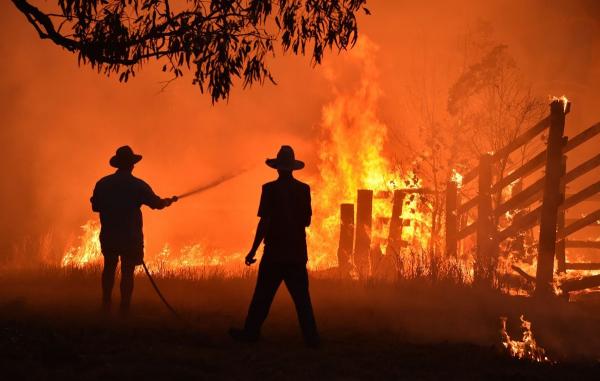
With summer on its way, bushfires will probably be on your mind – so it’s a good time to think about what you can do now and throughout the year ahead to be bushfire prepared.
Bushfire researcher and veterinarian Dr Caitlin Pfeiffer said there were steps producers can take year-round to be on the front foot.
“Think about it year-round and integrate it into your overall farm business plan. Doing small things at appropriate times during the year really adds up,” Caitlin said.
“All preparation is important.”
Caitlin is co-lead researcher on an MLA-funded project that is examining the long-term impact of bushfires on the health, welfare and productivity of sheep and cattle.
The project is a collaboration between the University of Melbourne, the University of Sydney and Ausvet, with assistance from Local Land Services NSW and private veterinarians in Victoria.
A key output will be an evidence-based Livestock Bushfire Preparedness and Recovery Manual for producers, due to be published in early 2022.
As part of the project, researchers interviewed 46 fire-affected producers from the devastating 2019–20 bushfire season.
Producers discussed their bushfire risk management, recovery strategies and any successes, and Caitlin said a common theme was the importance of having a fire plan.
“One of the strongest predictive factors for farms that didn’t lose livestock was having a fire plan in place,” she said.
“Many producers also found they were under-insured and warned other farmers: make sure your insurance is up to date.”
Caitlin said the key aspects of a bushfire plan for livestock farms are:
* Preparedness.
* Response.
* Recovery.
“Every farm is different, so your plan needs to be specific to your land, your livestock and your business.”
Preparedness involves thinking about:
* Keeping yourself safe – if you will stay, is your house a safe shelter?
* Regularly reviewing and updating insurances with your advisor.
* Identifying safe places for stock to be moved in the event of a fire.
* Undertaking fuel reduction around key assets, yards, stored feed and water, and critical fences.
* Finishing projects like burying water pipes underground or installing sprinklers.
In terms of fire response, producers said it was useful to:
* Move stock to safe areas.
* Have appropriate fire-fighting equipment and adequate water reserves.
* Have radios for communication.
Recovery planning includes:
* Having an area of the farm where stock could be kept after a fire with fire-proof water supply
* Having a support network of advisors, neighbours or friends.
“An important message from the producers involved in this research is that you can do everything right and still have losses. Having a plan that supports recovery is really important, not just for the future of the farm business, but also the emotional wellbeing of the farmers,” Caitlin said.
“More than half the people we spoke to sought professional advice to support recovery, including talking to agronomists, vets and nutritional advisors.
“Having a fresh set of eyes and someone to bounce ideas off is very helpful, whether that’s a paid advisor or your peers. Just talking to friends and neighbours who understand the local environment was also valuable during fire recovery.”